

Learn the First Rule of Leadership Success
In the movie, A Bug’s Life, Hopper the grasshopper says, “The first rule of leadership is everything is your fault.” That certainly can seem to be the way it is, but that is more a potential outcome than a rule. There are a couple of other ways out there to define the first rule for leadership success:
- Show up.
- Just be yourself.
Both relate to good advice. You cannot lead your team if you are not involved. Leading from “on high,” through edicts, emails, phone conferences or texts does not cut it today. Never really has. Employees experience way too much of that loftiness and it leads to their disengagement. It is also hard trying to be something you are not. Plus, it is not authentic.
The Problem with Leadership
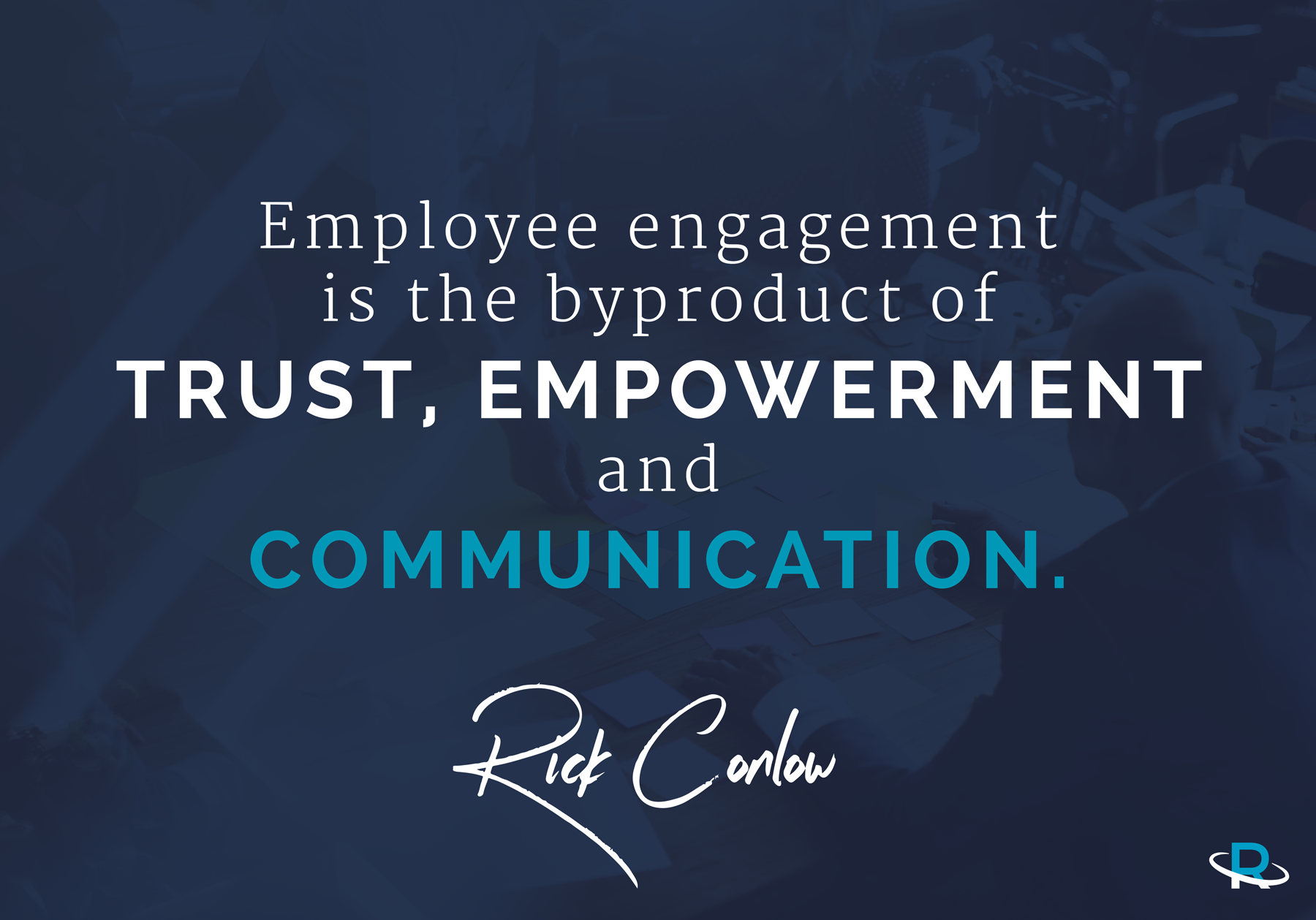
In a quick study of what is going on in organizations today there are two powerful clues to the first rule of leadership. Here is the evidence:
- High leadership distrust, 63% of employees don’t trust executives.
- Low employee engagement, 87% disengagement worldwide.
Lower employee engagement leads to significantly poorer business results. The top-down approach to leadership never really worked. That is about holding on to power, not releasing the potential of people. A lack of trust reigns at unprecedented levels in all types of organizations, especially in business and government.
The Antithesis of the First Rule of Leadership
Why don’t people trust business leaders?
Tony Hayward former CEO of BP declared the antithesis of the first rule of Leadership. During the tragic Deepwater Horizon oil spill of 2010, the worst spill in US history, while dealing with it, Hayward said, “…I would like my life back.” He also commented to BP executives, “What did we do to deserve this?!” He seemed more concerned about himself and the company, like so many other executives and managers, than he was about the employees who died, the environmental disaster and economic blow endured by the employees and their communities.
Employees are wary of leaders that:
- are aloof and arrogant.
- focus selfish personal goals and are unconcerned about their success.
- are unethical and lack integrity.
- treat them poorly in terms of respect, compassion, and kindness.
- do not listen to their concerns.
- fail to deal with problems in a fair or timely manner.
The First Rule of Leadership Success

The above traits fan the flames of employee fears, dissatisfaction and discontent which decrease employee performance across the board. The first rule of leadership success for any supervisor, manager and executive is that “It isn’t about you, it is about the team.” Rare are the leaders who make the time to understand, listen, empathize, and act on the needs or issues of their teams and other constituents. These Servant Leaders know that when their team wins, they win. So, they empower the team, clear away obstacles, encourage and train them, and support them in any positive way they can. They create trust.

Donald Rumsfeld, former US Defense Secretary, once said, “Reports that say that something has not happened are always interesting to me, because as we know, there are known knowns; there are things we know we know. We also know there are known unknowns; that is to say we know there are some things we do not know. But there are also unknown unknowns – the ones we do not know we do not know.” This “governmentese” talk alienates others and gives a classic example of managers who are aloof to the needs of others and do not know or care about the first rule of leadership.
In contrast Nelson Mandela said, “A good leader can engage in a debate frankly and thoroughly, knowing that at the end he and the other side must be closer, and thus emerge stronger. You do not have that idea when you are arrogant, superficial, and uninformed.” And that is the big problem, isn’t it?
Personal Career Growth and Servant Leadership Development Resources
 Also, check out our complimentary inventory and guide: Success Practices Inventory and Guide.

In addition, learn tools to achieve your goals here: GoalPower: How to Increase your Personal Performance and Career Success.
Furthermore, the world desperately needs leaders that have empathy and care. And elevate them as partners. Therefore, join the revolution in leadership thought and practice that elevates people first through Servant Leadership on LinkedIn: ServantLeadership@RickConlowInternational
 Also, add to or develop your skills as a Servant Leader here: 21 Servant Leadership Training Lessons. In addition, go here to accelerate your leadership success and learn more about Servant Leadership, see Rick’s newest book, The Dynamics of Servant Leadership: Inspire Your Team to Achieve Extraordinary Goals! Finally, do you want to accelerate your management career? Check
 out Rick’s best-selling book,Superstar Leadership Model.


